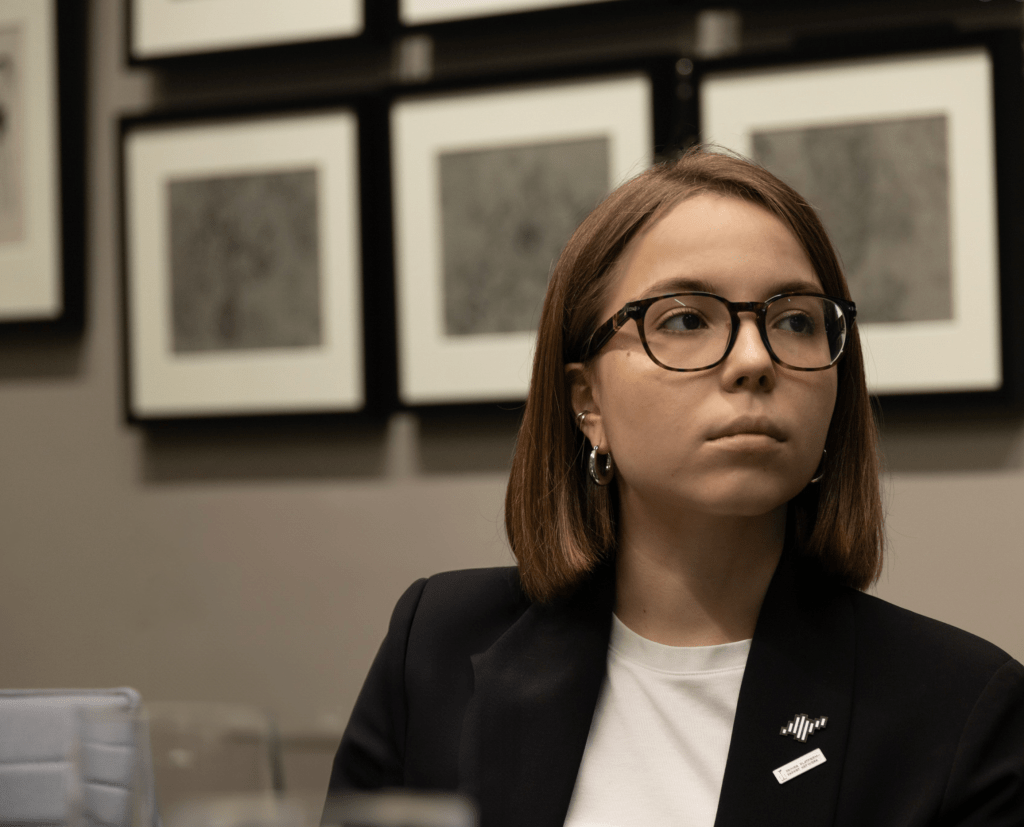
Daryna Pidhorna is a legal expert and analyst at the Rafael Lemkin Society in Kyiv, a lawyer specialised in international humanitarian and criminal law. Her focus sits in a corner of the war that receives far less attention than the front line: the deliberate destruction of Ukrainian culture, its monuments, museums, and archaeological sites, and the fight to have that destruction recognised as a crime in its own right. Cultural genocide does not exist as a legal term. It was written into the first draft of the Genocide Convention in 1948, then removed under pressure from states, and has stayed absent from international law ever since. Daryna is part of the small team trying to change that, starting with Ukraine’s own legislation. We spoke with her over a video call, a conversation about archaeology, memory, and the case for naming a crime the law has never been willing to say.
An archaeologist’s eye, a lawyer’s degree
Daryna was born in Kyiv, into a family that had nothing to do with archaeology or culture. Her father is a Ukrainian diplomat, her mother a former teacher. Because of her father’s postings, she grew up travelling, and it gave her an early, uncomfortable measure of comparison.
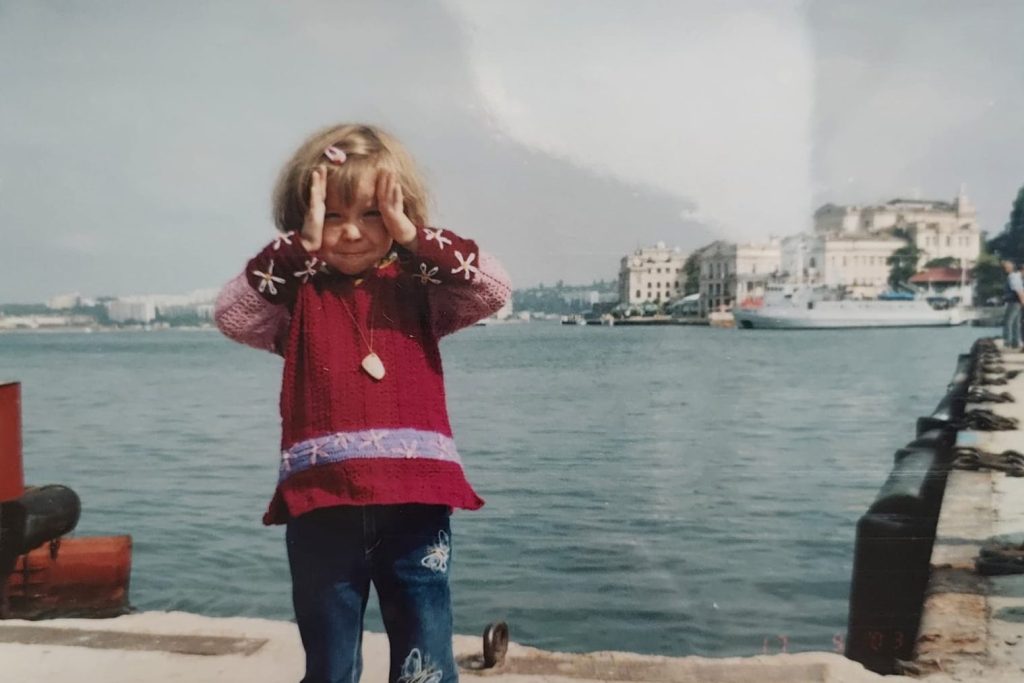
“It was always a question for me,” she recalls, “why culture abroad was protected so well, while in Ukraine it mostly looked like rubble.”
At school, history was her favorite subject, the class she waited for all week. When the time came to choose a university path, her first instinct was archaeology. But the cultural sector in Ukraine offered low pay, little prestige, and what she calls a “life of surviving rather than developing”. So she made what she describes as a pragmatic choice: international law. She would not dig up heritage. She would learn to defend it.
Chasing a question no one took seriously
Her real entry into the field came through people. At university, one of her mentors, a professor, Mykola Gnatovskyi, who is today a Ukrainian judge at the European Court of Human Rights, helped her shape a master’s degree around international criminal law and cultural heritage. Then, in 2020, while still finishing her master’s, she took a job as a lawyer at the Regional Center for Human Rights, an organisation founded in Sevastopol in 2013 and forced to relocate to Kyiv after the occupation. Her supervisor there, Serhii Morkeniuk, was himself from Crimea, and he carried the same unusual obsession she did.
She almost quit at the beginning. The work was statistics, dry data, nothing she cared about. It was Morkeniuk who pulled her back and proposed she work on culture instead. “He helped me survive in this sphere,” she says. “He helped me become who I am today.” She remembers the long arguments over how best to protect culture, the shouting that turned into embraces, the rest of the office unable to follow a language that was theirs alone. Two people who understood each other because they wanted the same thing, to defend something that was a large part of who they were.
Together, in 2020 and 2021, they researched illicit archaeological excavations in Crimea and tried to answer a question almost no one in the legal world was asking: how do you capture, in legal terms, an attempt to shape or unmake a people’s identity? “We looked like madmen,” she laughs, “running around every conference in Ukraine with those questions, years before anyone else thought to ask them.” They worked the question as lawyers, because that was the only training they had, neither of them schooled in culture, and she was still a student, afraid of pressing her own objections too far.
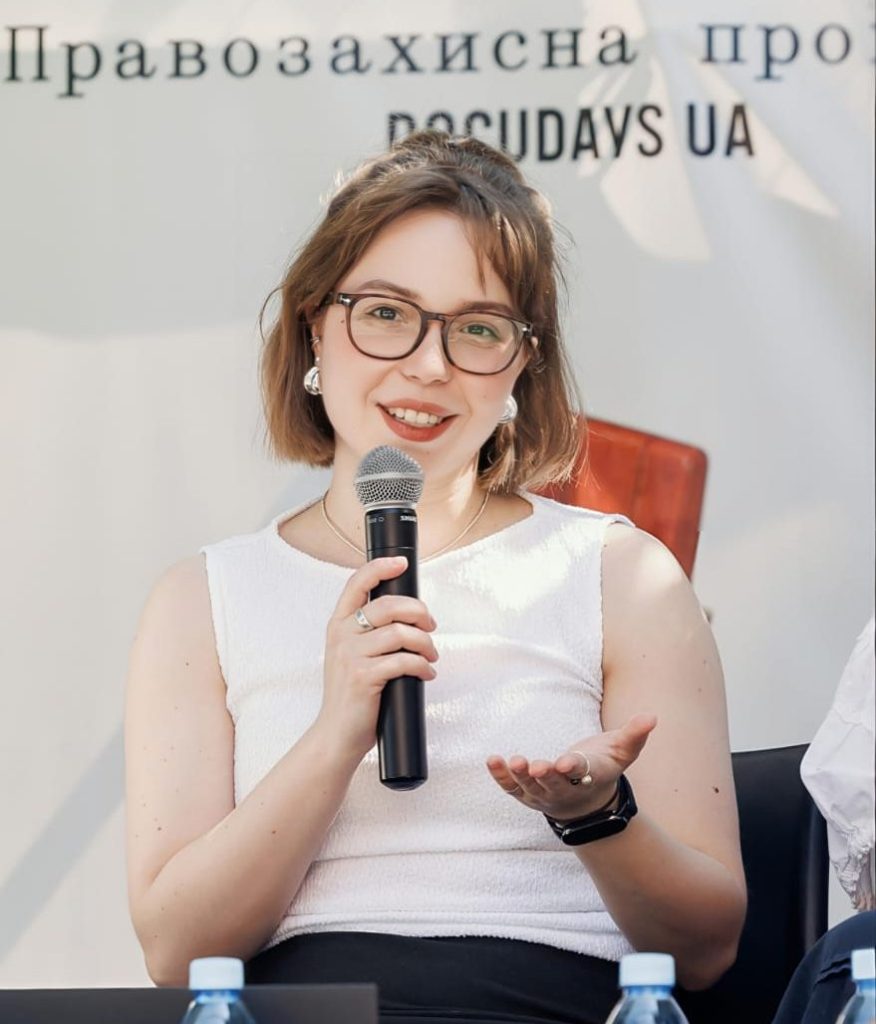
Then February 2022 came. Her supervisor left for the army. She stayed behind, alone with the work they had built together, and with the sudden responsibility of continuing it.
Cultural genocide, the missing word
In the years that followed, Daryna kept researching excavations, then widened her lens to museums, to how institutions communicate history, and eventually to the feeling that law alone was not enough to understand what she was seeing. She enrolled in a master’s programme in memory studies and public history at the Kyiv School of Economics, where she received the Yar Batoh Memorial Scholarship. She has just finished her thesis and is now waiting for her graduation ceremony. That degree, she says, was the turning point of her professional life. “I started to think that culture is much more than just a monument. It changed not only my work, it changed me.”
In parallel, she now works at the Rafael Lemkin Society, founded in Kyiv in 2024 and named after the Polish Jewish lawyer who invented the word genocide. The organisation unites researchers, cultural leaders, and lawyers around one mission: to establish crimes against culture as a component of international crimes, including the crime of genocide.
Because here lies the legal void at the centre of her work. Cultural genocide is not recognised in international law. It existed in the draft of the Genocide Convention, and was removed in the final round under pressure from states. History offers a bitter detail: the USSR actually argued in favour of including it, apparently without recognising its own policies in the definition.
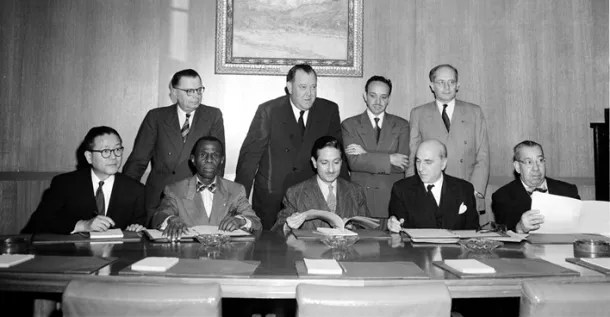
The Lemkin Society’s answer is to start at home. In January 2026, the organisation drafted a proposal to write cultural genocide into Ukraine’s national legislation and brought it to members of parliament. The draft is now on the table of the Verkhovna Rada. Daryna expects an amendment to the criminal code before the end of the year.
“I see it as legal, because it is still about the law,” she explains, “but also as a political statement. That Ukraine recognises these attacks on culture not as ordinary war crimes, but as something systematic. As Russia wanting to destroy us.”
Crimea, the laboratory of erasure
Ask Daryna about the mechanism behind Russia’s cultural destruction, and she takes you back to Crimea. She spent her childhood summers there before 2014, in the kids’ camps and sanatoriums of Feodosia and Sevastopol, by the submarine coves of Balaklava. She knew the peninsula as a holiday. She would come to know it as the first testing ground, the place where everything Russia now does in the occupied territories was rehearsed, starting with the invasion of 2014.
The method is bureaucratic, which is precisely what makes it effective. First come laws of appropriation, declaring all cultural objects on the territory property of the Russian Federation, free to be moved, renamed, excavated, or destroyed. Then comes personnel: officials shipped in from Russia and installed at the top of the cultural hierarchy, like the Moscow appointee who became the so called minister of culture of Crimea. Then the narratives change. Museum expositions are rewritten to glorify the so called referendum and the so called Crimean Spring.
The pattern did not stop at Crimea. Donetsk and Luhansk had been occupied since 2014 and run as self declared republics. In 2022, Russia folded all four regions into the Federation through inclusion treaties, and for the two eastern republics almost nothing changed beyond the ceremony of it. Kherson and Zaporizhzhia were handed a freshly written story of lands that had supposedly always been Russian. What every treaty shared was a single clause: all culture on the territory passed into Russian ownership, Ukrainian heritage relabelled as Russian. “They just changed the name of the republic,” she notes. “Everything else stayed the same.”
What sets Crimea apart is the digging. The peninsula is the richest archaeological region of Ukraine, and Russia has known it since Soviet times. A whole administrative pipeline exists: a researcher with Russian citizenship writes to the ministry, receives permission and funding, and excavates. Some archaeologists who once held Ukrainian passports took Russian ones and now dig alongside the occupiers, convinced Russia saved them and that Crimea was never a Ukrainian peninsula at all.
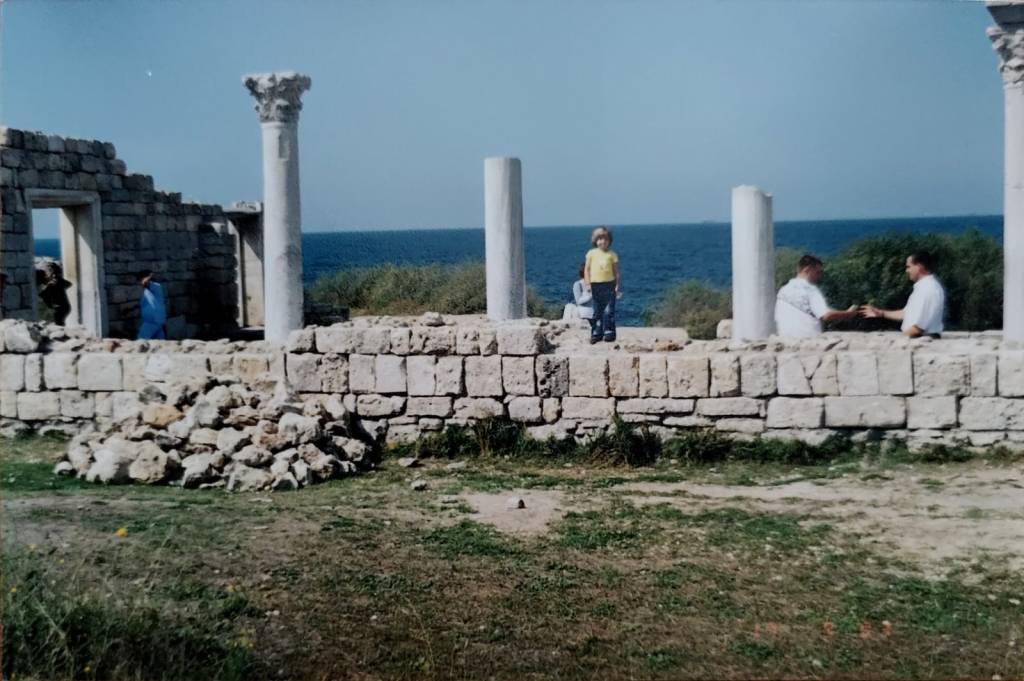
Illicit excavations have multiplied across Crimea since 2014, Daryna says, largely documented from what the excavators proudly publish themselves, feeding off major construction projects like the Tavrida highway and the Kerch bridge, and reaching even into Chersonese, the only UNESCO World Heritage site in all the occupied territories. On twenty four hectares beside the ancient city, with backing from the Russian presidential administration, the defence ministry, and the Orthodox Church, Russia has built a new historical and archaeological park, New Chersonese, its three museums staging the peninsula as the cradle of Russian statehood and orthodoxy.
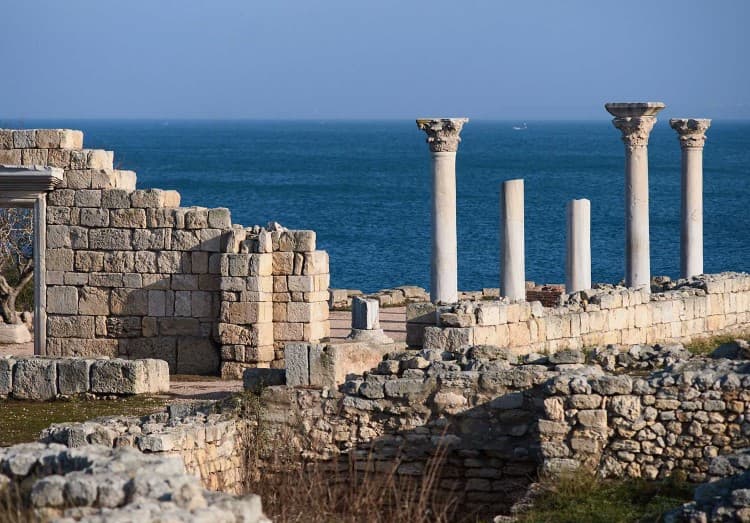
She met the head of the UNESCO mission in Ukraine in January 2023 and laid the Chersonese file on the table. The answer stunned her. “They said, we did not have such data. They heard about it in detail for the first time from me. And I still have this question in mind: what was UNESCO doing all that time?” UNESCO conducted off site monitoring missions for Damascus and for Iraq, she points out. For the occupied territories of Ukraine, it chose not to.
The theft Ukraine cannot even count
The scale of the loss is difficult to hold in the mind, partly because no one fully knows it. In Crimea alone, around 1,651 archaeological operations had been authorised by the Russian ministry of culture as of April 2026, more than 80% of them excavations, and by Daryna’s count roughly fourteen million items have been pulled from the ground, several million of them from Chersonese. As of July 2026, UNESCO has verified damage to 540 cultural sites across Ukraine, a deliberately cautious count that includes 155 religious sites, 43 museums, and 22 libraries. Ukraine’s ministry of culture speaks of more than 1.7 million cultural items stolen from the occupied territories since 2022.
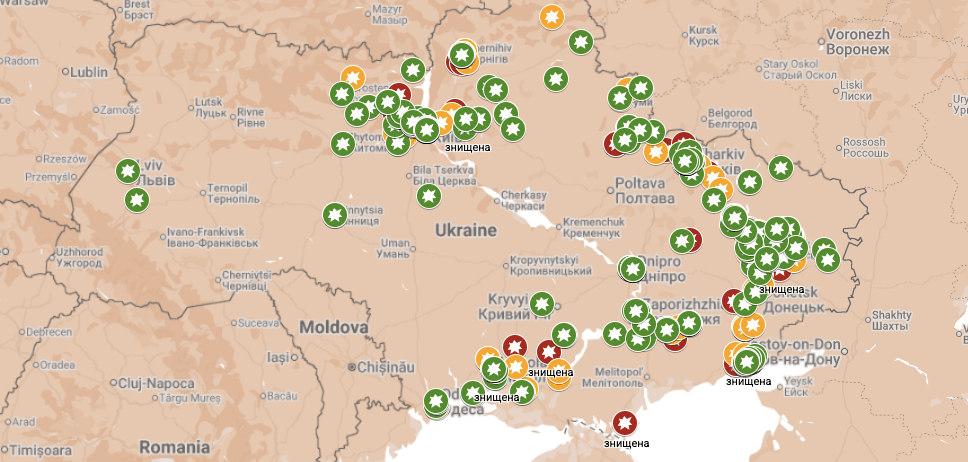
Kherson shows what those numbers mean on the ground. When the city was liberated in late 2022, the art museum’s director returned to empty storage rooms. Before the invasion the museum held more than 14,000 works. As Russian forces retreated, they loaded the collection onto trucks bound for Crimea, and the fate of nearly 10,000 pieces remains unknown. The removal was framed, as always, as protection. Kherson is also the exception that proves Daryna’s darkest point. The museum’s director had photographed her entire collection before the war and hidden the hard drives during the occupation. That archive is now one of the most detailed records of looted cultural property in the country, and prosecutors can work with it item by item. Almost nowhere else does such documentation exist. One other exception is the Mariupol Local Lore Museum, whose digital catalogue the Lemkin Society helped assemble.
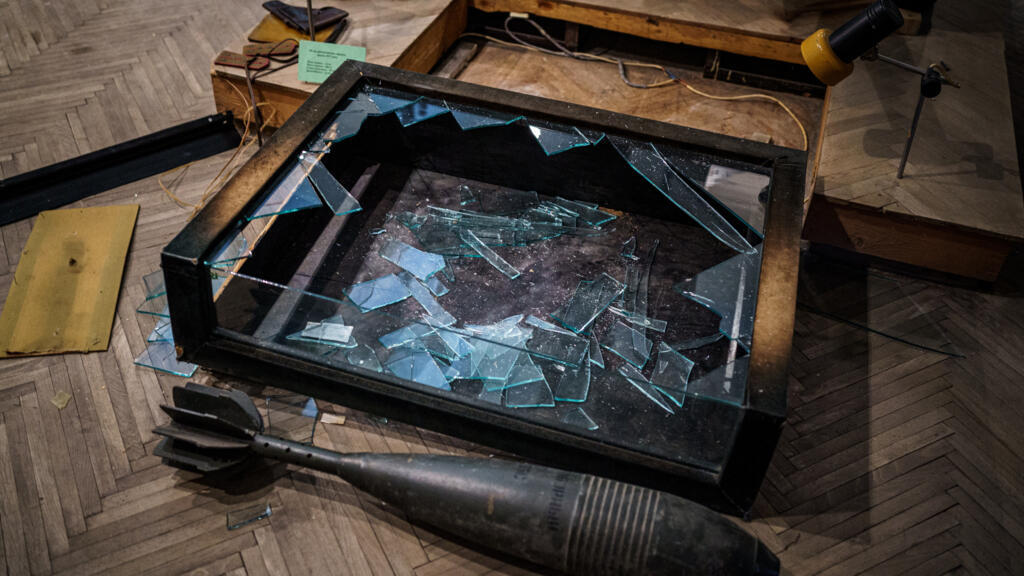
Source: AFP — Dimitar Dilkoff
The deeper problem, Daryna says, was never only that Ukraine entered the occupation, in 2014 and again in 2022, without a complete inventory of its own heritage. What existed were paper records, in the worst cases handwritten since Soviet times, with no centralised catalogue: information sat scattered across individual museums, archives, and libraries, and some local administrations had no clear idea what culture even fell under their control. And what had been listed was not necessarily Ukrainian. By her rough estimate, sixty to seventy percent of the heritage recorded before 2014 was Soviet era monuments to Russian leaders and military commanders: Lenin, the tomb of the unknown Soviet soldier, Dzerzhinsky, Vatutin. Russia has since issued a decree ordering all monuments, museums, and collections in the occupied territories to be registered as Russian heritage by 2027. In 2023, 77 Ukrainian museums were folded into Russia’s national catalogue.
“We do not know what exact data will appear in the Russian lists,” Daryna says. “It is like a black hole in all our attempts to save the culture. We can lose everything, because at the moment of occupation, we did not have any list, any idea of what our culture is looking like and what we had lost.”
You cannot reclaim what you never counted. This is why the Lemkin Society exists as it does: a small team that gathers documentation from partner organisations, from field missions to destroyed monuments, from witnesses, from monitoring of the occupied territories, and transforms it into legal texts for Ukraine’s law enforcement, prosecutors, and lawmakers. Museum workers, historians, architects, and urban designers supply the expertise a lawyer cannot have alone. “In my previous organisation, I was the only lawyer interested in culture,” she says. “Here, culture is the main point, not a side one. I am working for the best organisation ever.”
How do you repair the unrepairable
The hardest questions in Daryna’s field are the ones that come after documentation. How do you repair a destroyed link between a community and its heritage? How do you calculate not only the physical damage to culture, but the emotional one, the non material loss?
She has gone looking for answers abroad, in the experience of Canada, South Africa, Morocco, Mali, Ethiopia, and the former Yugoslavia. The comparisons are sobering. In Mali, the International Criminal Court delivered a landmark conviction and UNESCO rebuilt the mausoleums of Timbuktu, yet the bond between the community and its shrines, she notes, had already been altered. In Mostar, the reconstructed bridge did not reconstruct the trust between the communities on its two banks. Canada’s truth commission named the residential schools for Indigenous children a cultural genocide, yet Canadian society itself still has little idea of what happened in its own history, a precedent she finds painfully translatable to the situation of Ukrainian children in the occupied territories.
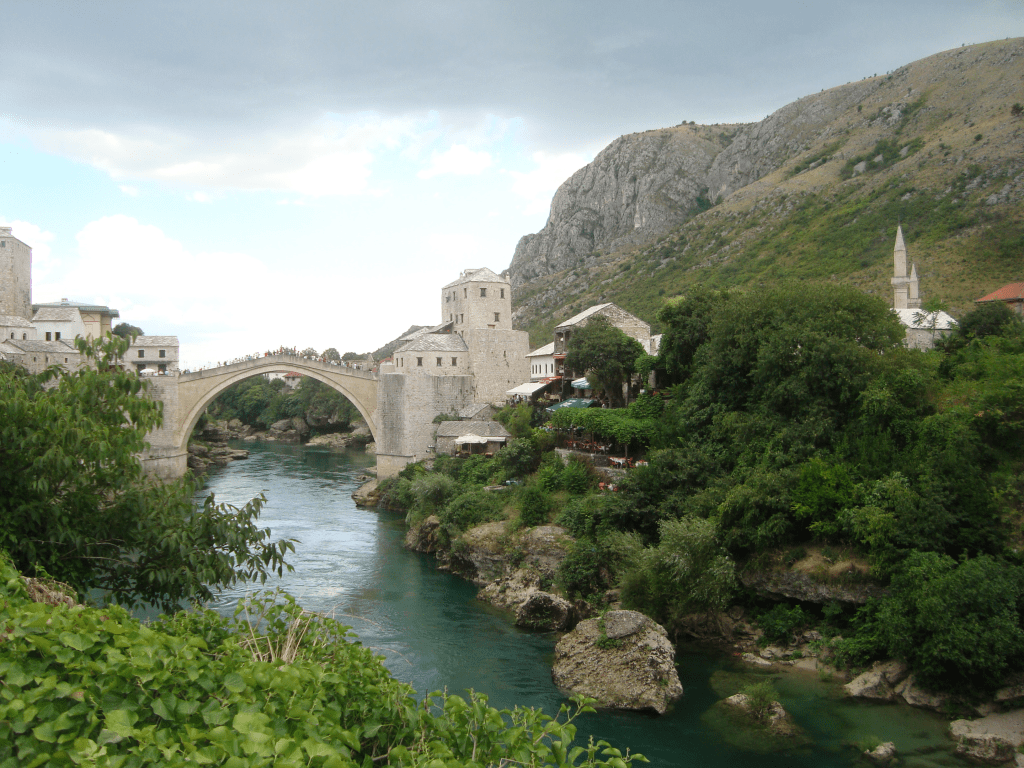
Her master’s thesis explored whether a truth and reconciliation commission, a legal body set up after a conflict to seek and tell the truth of what happened, could one day serve Ukraine. What she found was a void: barely a handful of academic papers on reconciliation through culture, little interest from society or the state, and donors reluctant to fund something that may or may not work in twenty years. She was once part of a governmental working group on what was called the cognitive deoccupation of Crimea, an attempt to understand what years of occupation do to the minds of the people living under it. “It was a sad experience,” she admits. “We still have a huge lack of understanding, as a society and as a state, of who those people are and what they think. But at least it was a first step.”
Why the world looks away
The deeper problem, for Daryna, is one of hierarchy. In a war counted in ruined homes and hospitals, culture is always the loss that can wait, dealt with once the urgent dying is done. And when the culture is Ukrainian, the wait is longer still. When Notre Dame burned, the world sent money within days. When the Mariupol Drama Theatre was bombed, it drew sorrow, and little of the funding that rebuilds. Italy offered to restore it once the city is free, a rare exception.
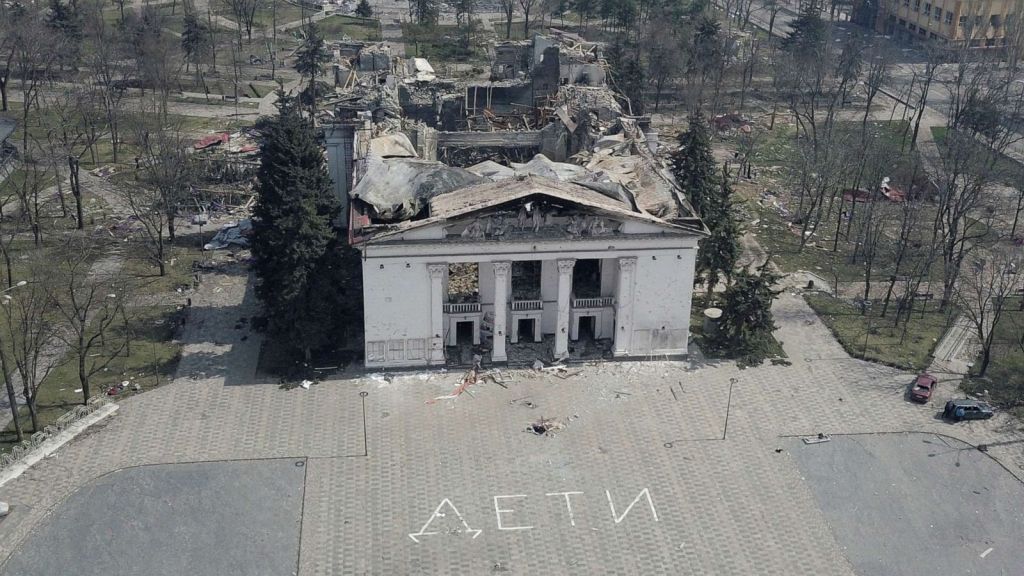
That, she argues, is the mistake. Destroying a culture is not a lesser harm to be handled after the real ones. It targets what a people is, and whether it remains itself. A shelled hospital takes lives. A looted museum or a rewritten textbook takes something slower to notice and harder to recover: a people’s sense of who they are. The two are not a serious crime and a minor one. They are the same attack, by other means. And this part of the attack does not end when the strike does. Its effects appear years later, in peace talks, in reconstruction plans, in children taught a version of history written for them by someone else.
Daryna’s work is far from over. She has not yet chosen between a PhD in history and one in law, still caught between the two disciplines that have shaped her, unwilling to give up either. What she does know is more concrete: the proposal to write cultural genocide into Ukraine’s criminal code, now before the Verkhovna Rada, exists because she and a handful of colleagues refused to let the question go. If it passes before the year is out, as she expects, Ukraine will be among the first states to name in its own law a crime the world has spent nearly eighty years refusing to define. It will not bring back what was taken from Chersonese, or Kherson, or the peninsula of her childhood summers. But it will make the taking a crime with a name, and that, for Daryna, is where everything else has to begin.
—
Echoes from Ukraine / Valentin Jędraszyk


Leave a Reply