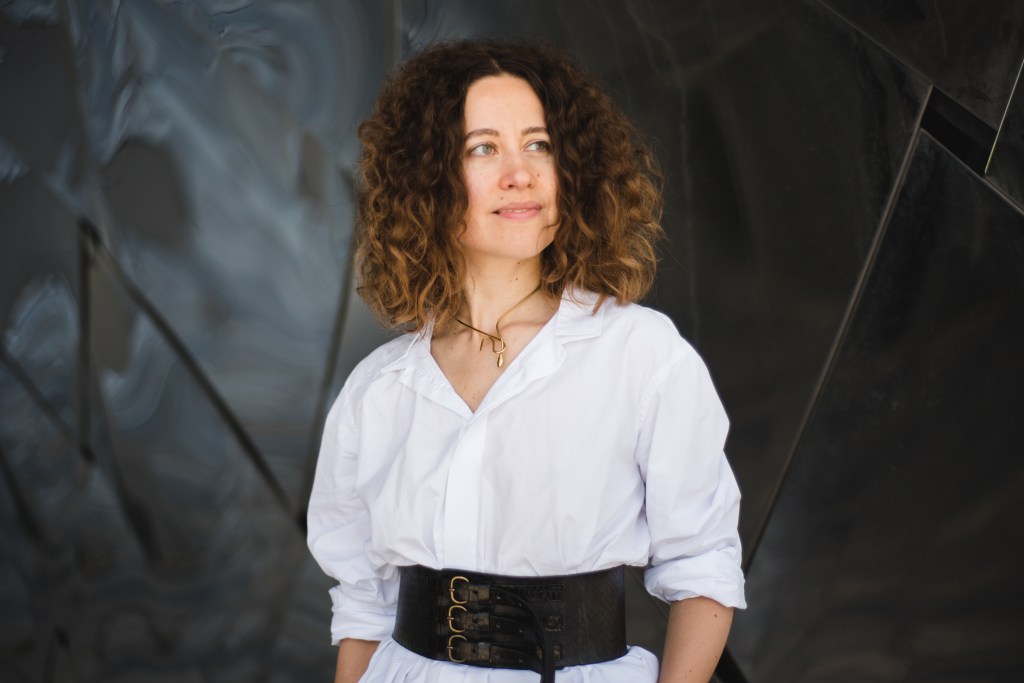
It is two days before Christmas when I step into U.Graine, a Ukrainian café florist in Paris’ 6th arrondissement, to meet Anna Stavychenko. More than just a coffee-shop, U.Graine is a cultural space and the perfect setting for this conversation. Anna, a muse of the place and one of its investors, speaks about it the way one would speak about a cultural project rather than a business. A soft Christmas playlist hums quietly in the background. She orders a cappuccino and smiles at the flower floating in the foam. The atmosphere is calm, almost protective. And yet, the contrast with what she describes next is brutal. While Paris is slowing down for the holidays, Ukrainian musicians are rehearsing between air raid alerts, receiving messages announcing the deaths of colleagues, or arriving in Europe … without their repertoire.
Fighting to be Heard
From the very first words of our conversation, Anna insists: the full-scale war launched by the Russian Federation against Ukraine does not stop at the front lines. It has also reached rehearsal rooms and concert halls. Artists, she explains, are losing their lives in this war—fighting on the battlefield, being killed by Russian strikes on civilians, and being directly targeted for who they are. She names some of her colleagues who were killed: the opera singer Ihor Voronka and the conductor Kostiantyn Starovytskyi, both killed in action while serving in the Ukrainian Armed Forces. She also names the conductor Yurii Kerpatenko, shot by Russians in his own house in Kherson after refusing to collaborate with the occupiers. For Anna, the conclusion is clear: this war is not only about military operations. It is cultural. It seeks to erase memory and silence voices. Ukraine, she says, is fighting not only for its borders, but also for the right of Ukrainian culture to exist, to circulate, and to be heard as such. And it is also fighting for “you”, for Europe, for shared ideas of freedom and democracy.
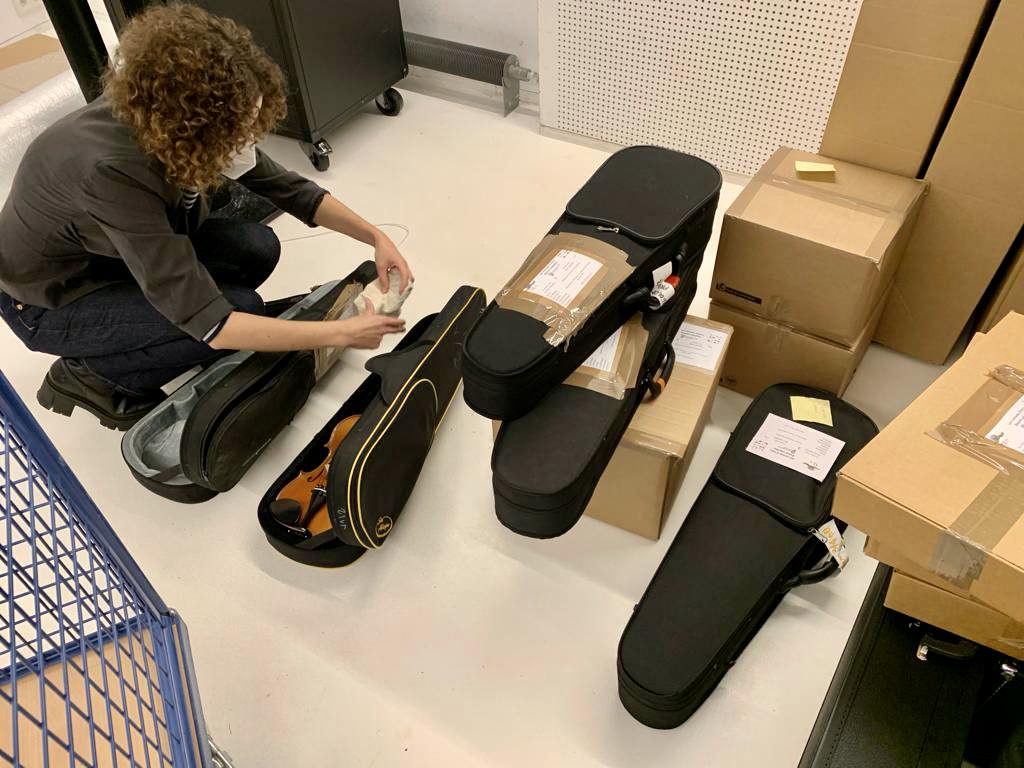
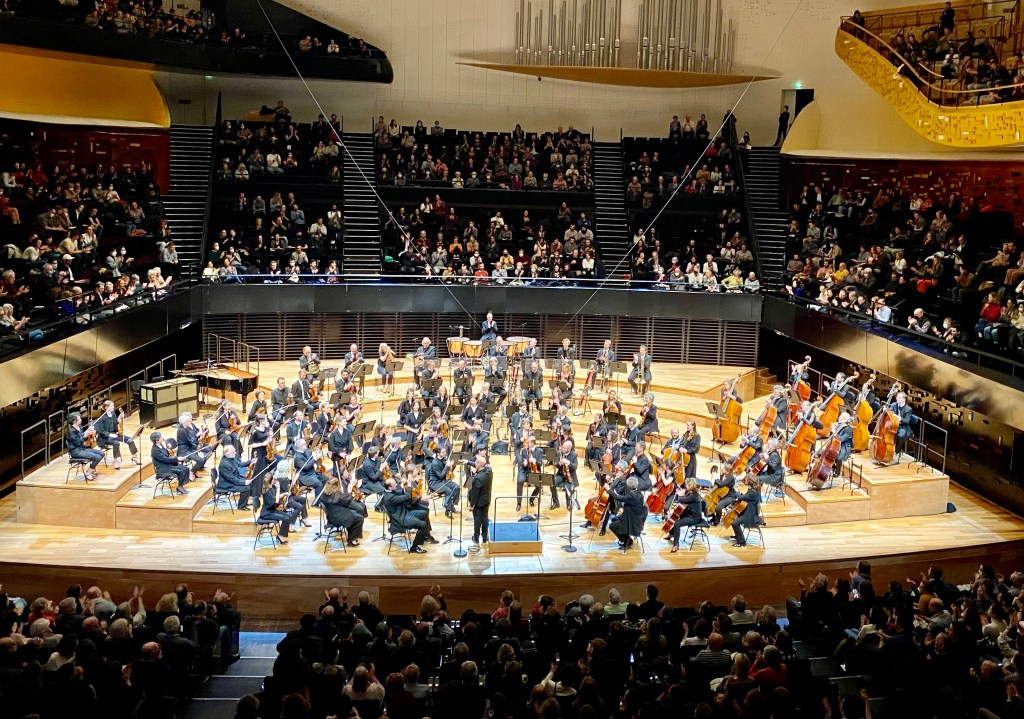
In recent years, Ukrainian musicians have become more visible on European stages. In the first months of the war, urgency ruled: many arrived without knowing where to sleep, without jobs opportunities, sometimes even without instruments. Anna spent more than two years leading the Philharmonie de Paris mission project, helping them one by one—often under enormous stress and in emergency mode—just to keep their careers alive. On an individual level—and in a few rare institutional cases—solidarity works. Yet, as Anna points out, this is where the dissonance hits hardest: the musicians are present, but their music is not. Ukrainian performers appear on stage, but Ukrainian repertoire remains almost entirely absent.
What is at work here, Anna explains, is a set of deeply ingrained cultural routines that continue to structure what European institutions consider acceptable. This is not the result of a deliberate exclusion of Ukrainian music, but of an old order that still quietly shapes habits and hierarchies. It operates through very concrete mechanisms: programming cycles planned years in advance that favor well-known and “safe” repertoires, the scarcity of mediation coming directly from Ukrainian sources, and institutional routines that reproduce inherited canons. None of this looks political. And yet, taken together, these mechanisms quietly decide what circulates as “universal” and what remains peripheral or exceptional. Within this framework, Russian music continues to be treated as neutral and apolitical, while Ukrainian music is sometimes perceived as revendicative and, on that basis, is more easily kept out of certain venues or programming choices.
This structural gap is not only visible in programs. It also shapes the way the war is discussed in Europe. Anna has often been struck by the gap between European debates and the reality around her. She recalls being asked by European journalists how she felt about boycotting Russian music on the very day one of her Ukrainian colleagues was killed by a Russian missile in her home in Kyiv. For her, such moments expose a profound disconnection. While Ukrainian artists live the war in their bodies and in their families, European cultural debates often remain confined to symbols, gestures, and abstract positions.
Learning to Be a Change
What allows Anna to articulate this paradox so precisely is that she was immersed in musical structures from a very young age. She grew up in Kyiv in a family of engineers, without professional musicians, but in an environment where culture mattered. In Ukraine, she explains, enrolling children in music or art schools is common and does not necessarily indicate a future artistic career. Art is considered part of general education, fostering discipline, focus, aesthetic sensibility, and a sense of structure. She began studying music at the age of three—cello, violin, and piano—and entered the highly demanding Lysenko Specialized Music School in Kyiv at seven, without any special preparation for its competitive exams. At the time, she did not perceive it as traumatic. Looking back, however, she describes the institution as extremely exacting, deeply challenging, and psychologically intense.
At sixteen, a serious shoulder injury abruptly ended any possibility of a professional violin career. The pain became chronic, making continuation physically impossible. Today, Anna does not seem to dramatize this moment. She mentions it as a challenge, not a tragedy. Yet it forced her to make a complete pivot: she moved from execution to reflection, from performance to analysis. She turned to musicology, history, and critical study, entering the National Music Academy of Ukraine and later researching opera in Germany, focusing in particular on Richard Wagner and Richard Strauss, and on the relationship between music, ideology, and power.
After her studies, she became one of the most influential Ukrainian opera critic of her generation and a passionate advocate for opera in its modern, often controversial forms. She worked with European opera houses such as Teatro alla Scala, Opéra de Paris, Vienna State Opera, and with festivals in Salzburg, Aix-en-Provence, and Bayreuth, while collaborating with all the state opera houses in Ukraine as a curator, advisor, and program director of the Ukrainian Opera Forum. She later became the Executive Director of the Kyiv Symphony Orchestra, where she worked directly on audience development, partnerships, and repertoire strategy. Budgets were tight, but the ambitions of the “dream team” were bold. With the Kyiv Symphony, she produced the first-ever—and sold-out—performance of Wagner’s Tristan und Isolde in Ukraine’s history at the National Opera of Ukraine in September 2021. The next big project was an all-Wagner program with the international music superstar singer Matthias Goerne, scheduled for March 4, 2022, at the National Opera. The concert never happened because of Russia’s full-scale invasion, despite all hopes and devotion: the orchestra had been rehearsing this extremely complex program late into the night on February 21, 2022, while foreign embassies and international companies were already evacuating their staff and many people were leaving Kyiv.
Through her professional path, Anna became acutely aware of a structural weakness: Ukraine has no coherent national cultural strategy. Cultural life relies overwhelmingly on individuals, private initiatives, and personal engagement rather than on sustained public policy. Understanding the significance of the Ukrainian repertoire, especially in the face of potential war, she became CEO of the Lyatoshynsky Club, created with her colleagues from the Kyiv Symphony just weeks before the full-scale invasion—an initiative dedicated to supporting Ukrainian composers, performing rarely played pieces, commissioning new works, and encouraging their circulation. From these experiences, one conviction crystallized: programming is not a technical task; it is a form of governance. Choosing what is played means choosing what is transmitted and remembered.
Project 1991: Making Ukrainian Music Part of the International Repertoire
The full-scale invasion in February 2022 marked a profound rupture. Cultural institutions were under attack, musicians displaced, and careers abruptly interrupted. Anna left Kyiv in the first weeks of the war and relocated to Poland, where she became involved in reorganizing the Kyiv Symphony Orchestra’s activities and international presence. She later moved to France at the invitation of the Philharmonie de Paris, remaining structurally connected to the Ukrainian musical field while witnessing the widening gap between the lived reality of Ukrainian artists and the responses of European institutions to the war.
It was from this position between Ukraine and Western Europe that the 1991 Project took shape. Founded in 2023 and named after the year of Ukraine’s independence, the initiative is deliberately not framed as a manifesto or a humanitarian effort. Supported by the Institute for Ideas and Imagination and the Columbia Global Paris Centre (Parisian Centre of Columbia University), the project gained access to venues, visibility through institutional networks, and fundraising support, primarily from U.S.-based donors. As both artistic director and curator, Anna structures each program around a theme or as a historical and aesthetic journey through a specific era, style, or compositional method, situating Ukrainian music within the broader context of European and global musical history. The aim is not to attract a separate, specific audience, but to reach all classical music listeners and have them encounter Ukrainian music as part of a wider musical experience—organically, in context, and in dialogue with other repertoires.

She is also very attentive to who plays the music. Ukrainian musicians are involved, but they are not alone. Anna actively looks for non-Ukrainian performers and ensembles willing to take scores and include them in their regular activity. Ukrainian music performed only by Ukrainians, for Ukrainian audiences, risks remaining confined to a cultural ghetto, marginal despite strong intentions. As long as it circulates only within Ukrainian networks, it remains markedly separate. When it is taken up by musicians for whom it is not an identity marker, it circulates differently. Music takes root when it is played by different musicians, in different places, without needing to justify its presence each time.
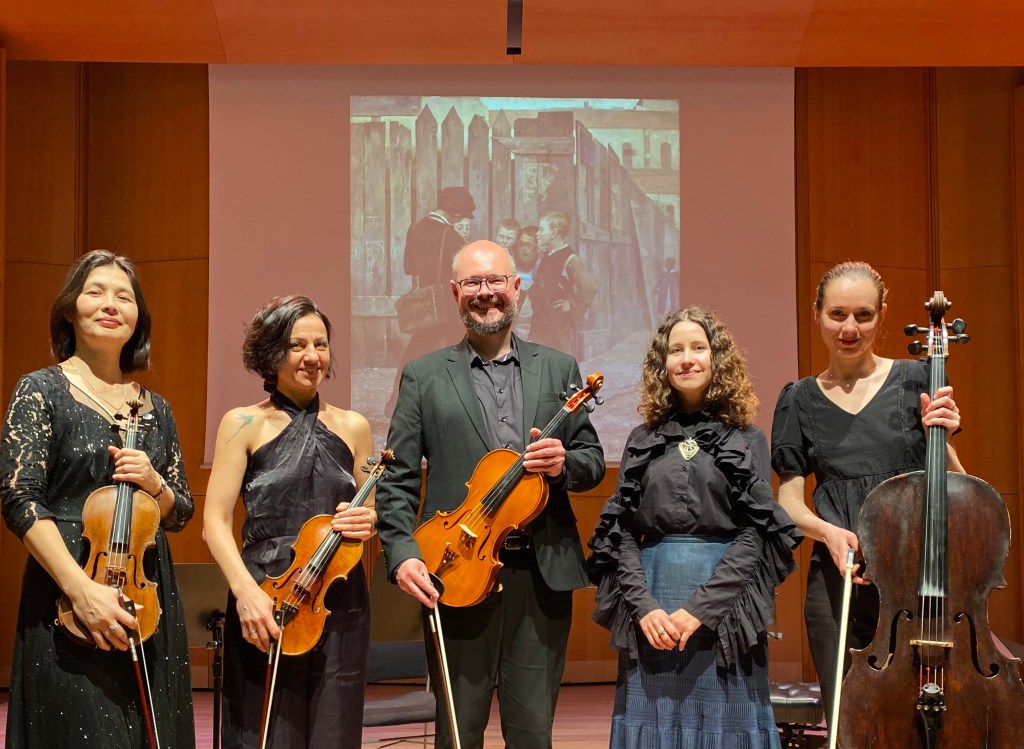
She illustrates this approach with two concrete projects. One concert, she notes, was centered on the work of the Ukrainian artist Marie Bashkirtseff (Maria Bashkirtseva) and her painting Un meeting, presented at the Musée d’Orsay. The program drew inspiration from Bashkirtseff’s extraordinary life and introspective spirit: Victoria Vita Poleva’s Walking on Waters, composed for one of the fifteen parables of her ballet The Mirror—which the composer describes as autobiographical—explores a sense of inner liberation, a transcendence of physical and emotional constraints. Its intimate, reflective musical language evokes the same introspective and self-exploratory qualities found in Bashkirtseff’s Diary and the subtle autobiographical elements of her painting. Lysenko’s D minor String Quartet, blending European Romantic techniques with Ukrainian folk elements, resonates with Bashkirtseff’s admiration for her homeland, while Darius Milhaud’s Quatuor pour cordes, Op. 16, No. 2 similarly combines stylized folk melodies with personal and historical experience, reflecting nostalgia, loss, and the enduring beauty of art—a resonance that parallels the tragic brevity of Bashkirtseff’s own life.
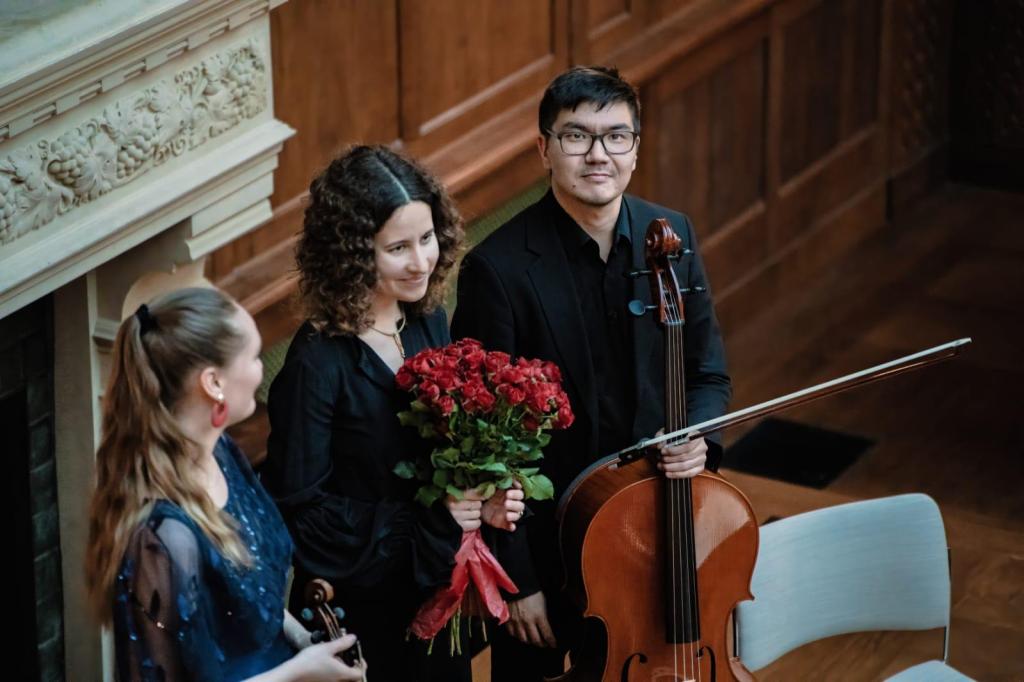
In another collaboration, with Arts Arena, she brought together Ukrainian pianist Evgeny Gromov, American violinist Rachel Koblyakov, and French cellist Askar Ishangaliev to perform Volodymyr Zahortsev’s Trio, for which the score was edited and digitalized for worldwide accessibility.
Starting With One Name
As the conversation comes to a close, I ask Anna a question that suddenly feels almost naive. If there was one name to start with, one Ukrainian composer Europeans should listen to, who would it be. Even as I ask it, I realize how perfectly it confirms her point. The very fact that the question still needs to be asked says everything. She answers without hesitation: Borys Lyatoshynsky. Being one of the great symphonic composers of the twentieth century, his works are almost absent from European concert life. His music is not marginal. It is not Eastern or peripheral. It is European. But music exists only if it circulates. It survives only if it is repeated. What is not played, Anna says, slowly disappears regardless of its value.
When we leave U.Graine, Christmas is close. Inside, the playlist continues softly. Somewhere between the café and the street, I think of Carol of the Bells, written by the Ukrainian composer Mykola Leontovych, who was killed in 1921 by Soviet authorities for his patriotic work. Originally a Ukrainian folk-inspired carol called Shchedryk, it became an international success through the tours of Alexander Koshetz’s choir, spreading Ukrainian culture worldwide. A melody now known everywhere but often detached from its origin.
Outside, Paris moves calmly toward the holidays. The question Anna leaves behind is a quiet one: How do we change what Europe hears?
 Echoes from Ukraine
Leave a comment