It is a great honor for me to welcome Yelyzaveta Yasko on Echoes from Ukraine. Lisa is a Member of Parliament at the Verkhovna Rada, sitting in the Foreign Affairs Committee. Additionally, she is the founder of the Yellow Blue Strategy NGO and a producer of documentary films, including “Crimea: Russia’s Dark Secret”.
Today, we have the privilege of discussing with Lisa not only the impacts of the ongoing war but also her significant contributions to civil society, cultural diplomacy, and legislative advancements in Ukraine. Her story is one of determination, leadership, and an unwavering commitment to her country.
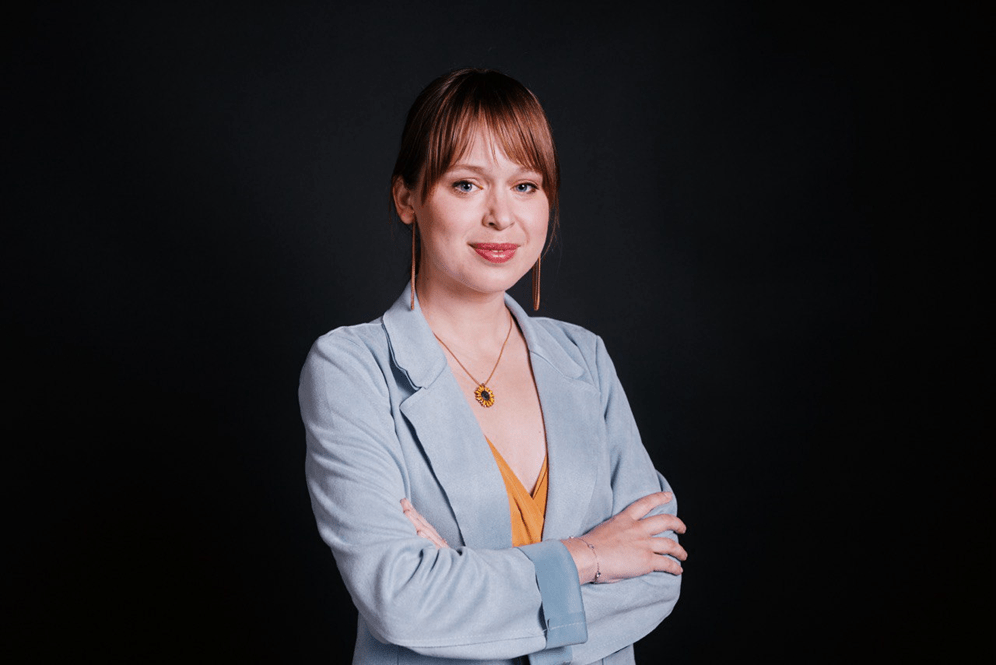
Lisa, thank you so much for agreeing to this interview. I believe you were born in Kyiv. Before getting into more serious topics, can you tell us a little bit about your background, your young years? As a child, what were your dreams and aspirations?
I was born in Kyiv and I belong to the generation of independent Ukrainians who have never experienced the oppression of the Soviet Union. When I was a child, my father worked as a professor and a concertmaster in a symphony orchestra in Greece. As a result, I spent almost every summer of my childhood in Greece. This time abroad began to shape my perception of Ukraine, how Ukraine and Ukrainians are perceived, and what we have to offer the world.
When I was a teenager, I realized that all I wanted to do was help Ukraine promote and protect its national interests. With this in mind, I studied political science in Kyiv and later public policy at the School of Government in Oxford. I believe that the education I received has greatly helped me understand political processes in the world, expanded my circle of contacts, and strengthened my character.
You are the first Ukrainian to earn a Master of Public Policy from the Blavatnik School of Government at Oxford. This must be a source of great pride for you. Do you think your achievement has paved the way for more Ukrainian students to follow in your footsteps?
My journey to Oxford was long and thorny. For many years, I considered Oxford an “unattainable goal.” As I set out to achieve this big dream of mine, I could not have imagined how much time and effort it would take. Preparation, writing letters, essays, and searching for funding all took me at least three years. Getting into Oxford is not a one-day affair. But with three scholarships, private support, and crowdfunding from more than 50 donors, I finally reached my Oxford Olympus.
Oxford is a place of dreams and perfectionism. It is one of the most prestigious universities in the world and for most people, this place seems unattainable. This is a great achievement for me. I believe that my way to Oxford demonstrates that this path is open to anyone willing to put in the work to achieve their dreams. My story is an example of how even the most ambitious dreams can become a reality with hard work and belief in oneself.
What were the key factors or experiences that inspired you to pursue a career in public service and represent your country in the Ukrainian Parliament?
The idea of thinking globally and acting locally has guided my activities since the time when I, despite coming from a family of classical musicians and ballet performers, decided to study politics to learn how to make a difference in Ukraine.
My background in political science, the Ukrainian parliament, volunteer activities, and work in government relations convinced me that poor management, the absence of strategic crisis communications, and policies on building trust are the biggest problems in Ukraine, which have roots in the communist past and have led to conflicts between the regions of Ukraine.
I was inspired by the belief that reforming public administration, communications, and cultural industries would serve this goal and be excellent tools for transforming Ukraine from a post-Soviet state to a modern, innovative, and creative European state.
I read that you are the leader of an all-party parliamentary group called “Happy Ukraine,” which aims to foster happiness, social dialogue, well-being, and a sense of security and hope for the future. Can you tell us about one key initiative of this group that you are proud of ?
The “Happy Ukraine” group was the idea of creating a group amongs MPs that would promote wellbeing policy in Ukraine. However, I understood that the perception of happiness among general publicis more linked to “ fun”, and that it is not the right time for this because of the Russian war of aggression against Ukraine. This made it quite difficult to actually launch and make any progress. So, unfortunately, this initiative didn’t have a long-lasting life. But I really hope that after the war is over, we will have an opportunity to create wellbeing policy initiatives that will help our society recover.
How have your legislative priorities and strategies shifted to address the challenges of national security, economic stability, and the ongoing efforts to reclaim Crimea and Donbass? How do you balance this with the country’s need for economic and social reforms?
As of today, I am trying to advocate for Ukraine on all possible platforms in Ukraine and around the world, with a significant focus on the sanctions policy against the Russian Federation.
Last June, the Parliamentary Assembly of the Council of Europe voted for my resolution on the role of sanctions in countering the Russian Federation’s war of aggression against Ukraine. This resolution reaffirms the effectiveness of sanctions and calls for increased pressure on Moscow, including banning the export of critical raw materials, military, and dual-use goods to Russia, disconnecting all Russian and Belarusian banks from the SWIFT system, adding those responsible for the persecution of political prisoners to the sanctions list, strengthening and expanding the ban on media outlets broadcasting Russian propaganda, and enforcing a ban on imports of Russian liquefied natural gas, pipeline gas, as well as products from the agricultural, metallurgical, and nuclear industries.
Regarding the issue of Crimea and Donbas, now in the third year of a full-scale war, the main issue on the agenda should be the de-occupation of the peninsula and eastern Ukraine, their liberation, and the restoration of Ukraine’s territorial integrity within internationally recognized borders. After all, if we do not jointly solve this problem of de-occupation of Crimea and Donbas, we will de facto start agreeing to a new international security architecture and a new global order based on the law of force introduced by the Russians.
What steps do you believe are crucial for Ukraine’s recovery and future stability post-conflict?
For the successful reconstruction of Ukraine, we need significant foreign investments. Specifically, we need investment in recovery and weapon production industries, investment in new healthcare technologies, sponsorship for rehabilitation and recovery projects, and sponsorship for educational training for various specialists.
Additionally, the full-scale war has turned Ukraine into one of the most mined countries in the world. At least 174,000 square kilometers—almost a third of Ukraine’s territory—are dangerous for life. Therefore, we urgently need equipment for demining.
Moreover, to build a peaceful future for Ukraine and the world after the war, it is necessary to work on reforming the global security architecture and security institutions like the UN Security Council to remove their institutional dysfunctionality. Additionally, it is crucial to bring those guilty of crimes against Ukraine and humanity to justice by creating a special tribunal for crimes of aggression against Ukraine and establishing a comprehensive compensation mechanism for Ukraine and the victims of aggression.
You are also the founder of an NGO called the Yelllow Blue Strategy. Can you elaborate on its goals and missions?
Yellow Blue Strategy is an NGO aiming to support Ukrainian recovery, cultural promotion, and freedom. The organization’s activities are focused on developing human security in Ukraine, supporting youth in the regions, fostering cultural communication among Ukraine’s regions, and effectively promoting Ukrainian culture abroad.
Due to the war of aggression, Yellow Blue Strategy’s activities are now focused on Ukrainian recovery by building healthy and safe spaces for developing creativity and positive thinking in Ukraine, investing in the sustainable and healthy development of Ukrainian society, supporting young professionals and artists in pursuing their education and creative endeavors, promoting cultural diplomacy of Ukraine and supporting cultural communication between Ukraine’s regions, and supporting the development of human security as a concept to protect security in Ukraine and Europe.
Some of our projects include “How Ukraine Sounds,” a Christmas music festive program produced in cooperation with one of the biggest Ukrainian TV channels, Ukraine 24 TV channel. This program features Ukrainian regional songs in jazz arrangements, performed by Ukrainian artists and the International Freedom Orchestra. Another project is “The Series of TV Programs on Ukrainian Identity and Diversity,” which covers various Ukrainian regions and cities, highlighting their unique cultural identities and promoting understanding and unity within the country.
In 2018, you produced the documentary film “Crimea: Russia’s Dark Secret”. Six years after, how do you look back at this project and the impacts it had, notably to raise awareness on the challenges faced by the Tatar community in annexed Crimea ?
Before I conceived the idea of making this film, it seemed to me that the outside world had easily forgotten about Crimea. Yes, sanctions had been imposed, but in reality, it felt like Russia had succeeded in its plan and taken over the peninsula by force. However, there are important facts that the world needs to know, which is why I decided to make this film.
“Crimea: Russia’s Dark Secret” tells the stories of people whose fates have rapidly changed and now depend on the actions taken against the Crimean Tatar people and activists who are not afraid to speak out about what is happening in Crimea today. While working on the film, we interviewed both the leaders of the Crimean Tatar people and the families of those directly affected by the 2014 annexation. We also addressed the topic of the 1944 deportation, life outside the historical homeland, and the return to Crimea.
In the fight against fake news in the post-truth world, I believe it is necessary to remember important facts from the history of Crimea: the annexation of 2014 was not the first annexation of Crimea. At the end of the 18th century, Catherine II issued a decree on the liquidation of the Crimean Khanate and the annexation of Crimea to the Russian Empire. In the nineteenth and twentieth centuries, the ethnic composition of the population was forcibly changed, with Russians settling in. The resettlement of the indigenous peoples of Crimea was constant due to repressions against them since the late seventeenth century.
I believe that the film will allow everyone who watches it to change their perception of Crimea and the Crimean Tatars, gaining a clear understanding that wherever there is Russia, there is suffering and injustice.
This platform blog also promotes Ukrainian culture, showcasing the resilience and creativity of its people. Lisa, as someone who deeply appreciates art, can you share a piece of art—whether it be music, a painting, or a book—that has provided you comfort and strength during these challenging times?
I should say that art has always played a special role in my life and is a big part of it. However, I don’t have enough energy for it now. But once I do, it may bring incredible relief and fulfillment, and it can contribute to peace-building within my soul. I’m talking about making music as well as creating and designing jewelry.
To conclude, what advice would you give to young Ukrainians aspiring to make a difference in their country?
I would advise young Ukrainians to go into politics and encourage political participation at all levels, inspiring others to believe they can make a difference in politics in Ukraine. We all have a role in shaping the future of our democracies. By actively participating and advocating for better systems, we can ensure that our voices are heard and that our democratic institutions remain strong and effective.
 Echoes from Ukraine
Leave a comment